

When the words won't come
Time on the road can break routines and cause writer's block. But there is a cure.

When the words won’t come
Time on the road can break routines and cause writer’s block. But there is a cure.
There’s probably nothing worse than travel when it comes to keeping a routine.
And when that routine feeds a writing practice, the effect can be numbing.
Since early April, I’ve been hopscotching across the country making photographs, gathering impressions for future essays and visiting family.
It’s been a hectic time: April 1 in San Pedro, Calif., April 5 in Scottsdale, Az., April 8 in Tucson, Az., April 14 back to home near Chicago, April 28 back in Tucson.
The April 14 trip home was the grueling flight from hell. It was supposed to take us from Tucson to Chicago in just over three hours. But due to two delays to fix issues with our aircraft—one in Tucson and another in Phoenix— and a torrential storm in Chicago our flight was diverted to Minneapolis, where we stayed overnight 3 hours before making it home the next afternoon. All told, the adventure took 14 hours.
I’m still exhausted just thinking about it.
What I’m getting at is this: keeping a writing routine in this type of climate was a challenge; no, it was near impossible. It left me not with writer’s block…it left me with more like writer’s cramp: thoughts would fire up in the brain, but wouldn’t quite make it down to the fingers and onto the page with any cohesion or sensible structure. The mind was running, but only on three of six cylinders.
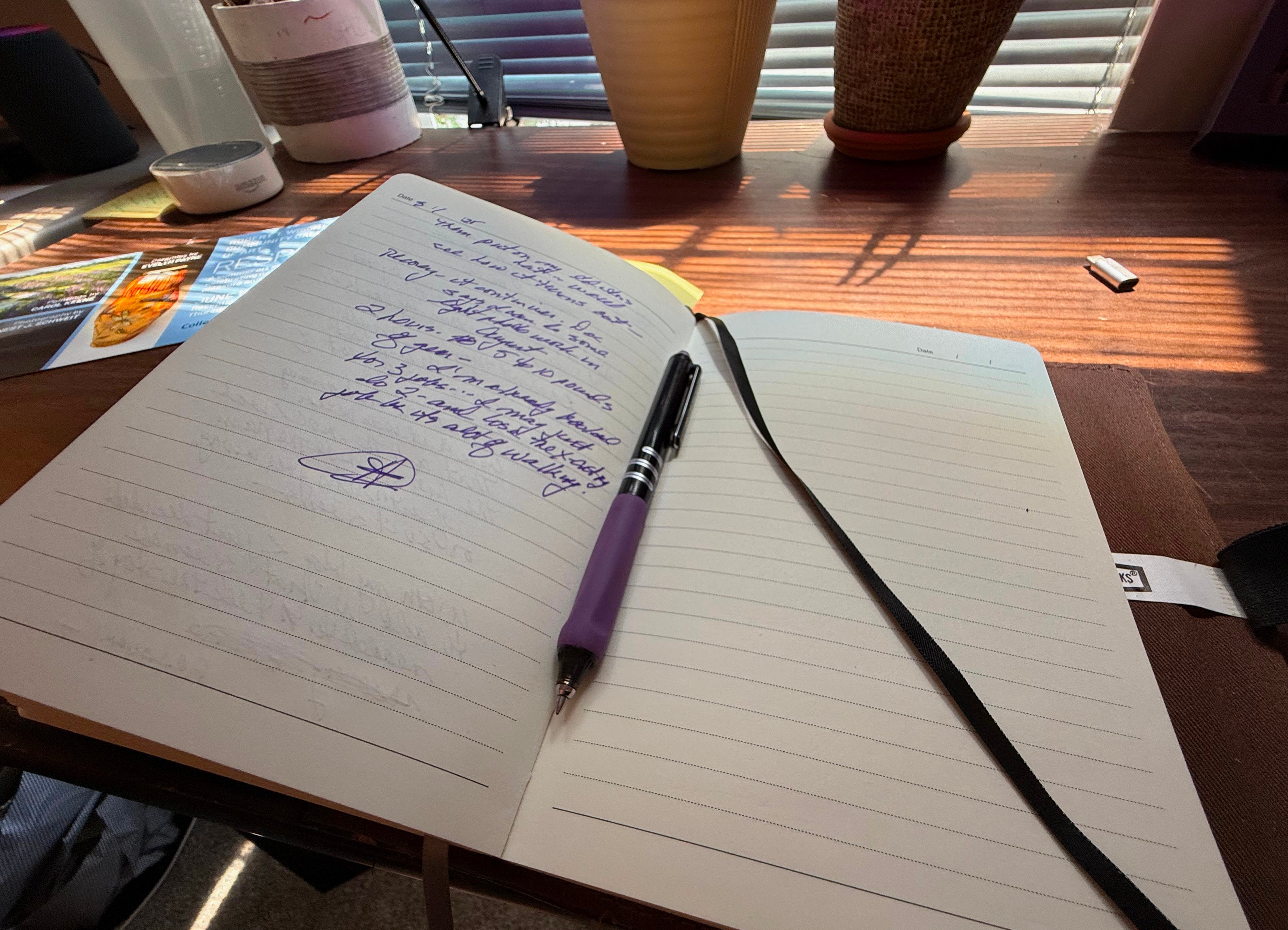
Photo by Ernest J. Schweit
Possible cures
There’s no shortage of tonics for this malady; just plug in the phrase in Google and watch the remedies appear. They are almost as numerous as there are writers.
The website www.finaldraft.com, which caters to screenwriters, cites several scientific studies that recommend ten ways to beat writer’s block.
Among them are:
+Take a walk or exercise.
+Go to talk therapy
+Try the “wandering brain technique”: fold clothes, shoot free throws or engage in some other “mundane” activity.
+Immerse yourself in cold water, ie., take a cold shower.
+Just stop thinking about what you’re working on; this is called “jump- starting your brain.”
The approach that works best for me is a practice based on Julia Cameron’s “The Artist’s Way.” She prescribes daily “morning pages,”: three pages of basically stream-of-consciousness writing to get the creative system flowing, so to speak.
I don’t write three pages every day; but when I’m blocked, I’ll turn to my personal journal and just start babbling, not out loud, but onto the blank page. Babble enough, and the thoughts and words eventually start flowing again.
Like this journal excerpt when I finally arrived in Tucson:
Damn!
It’s good to be back in Tucson.
I can breathe again.
Mountains
Hummingbirds
Mesquite trees
Palo Verde
Prickly Pear
The towering Catalinas, so close, you can almost see the black ironwood trees that are growing on their faces, and feel the granite as they undulate across the horizon
Tucson International. Small, compact, efficient.
Cactus in the parking lot.
Parking spaces that are actually open.
People who actually smile and help a weary traveler.
How un-O’Hare like!
The main drag in town, Oracle Avenue, winding north, the landscape morphing from 1950s suburban strip malls to gleaming shopping centers loaded with restaurants.
Blue sky, streaked with clouds.
More colors on more plants that add life to the desert as well as local shopping centers and the airport.
The stress that began with the 3 a.m. alarm in Chicago and continued until the car cranked to life in the parking lot in Tucson further loosened its grip with the first glance at the mighty Catalinas.
Good to be back, indeed!
The best cure
The best cure to all this is obviously putting down some roots.
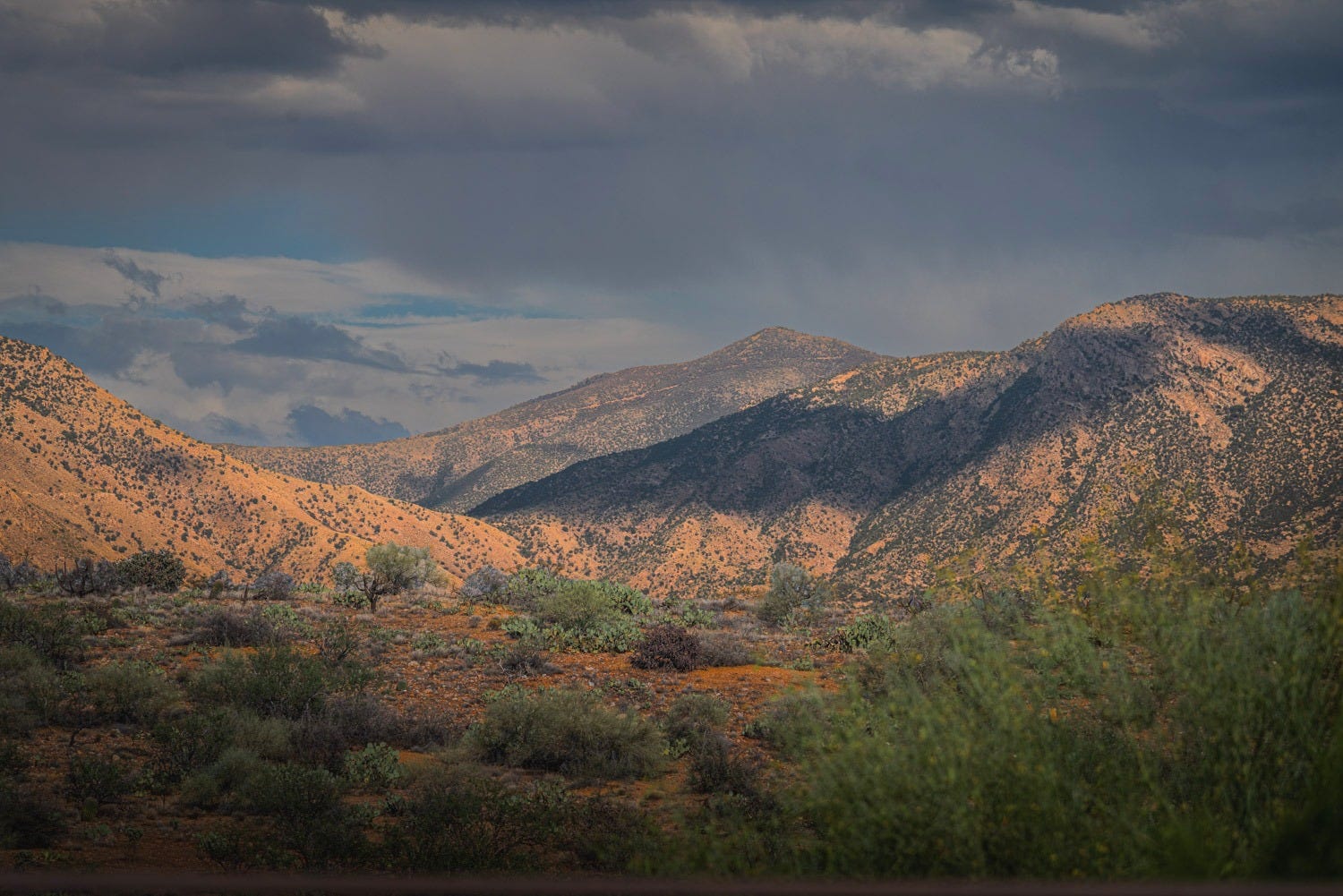
As of this writing, I am happily ensconced in Tucson, firmly planted in a routine that starts pre-dawn with a private viewing (lol) of sunrise, a few quick photos, journaling, meditating and exercise.
And, as you can see, the words are flowing.